Loading…
Case study · 02
Sonic Monolith
A music magazine with one person on staff.
A curated publication about underground music. AI helps with intake and drafting. Nothing goes live until I've read it and pressed publish myself.
Editor, designer, developer
2026
The editorial workflow
The admin board brings submissions, drafts, coverage and publishing into one place. This is where most of the work happens.
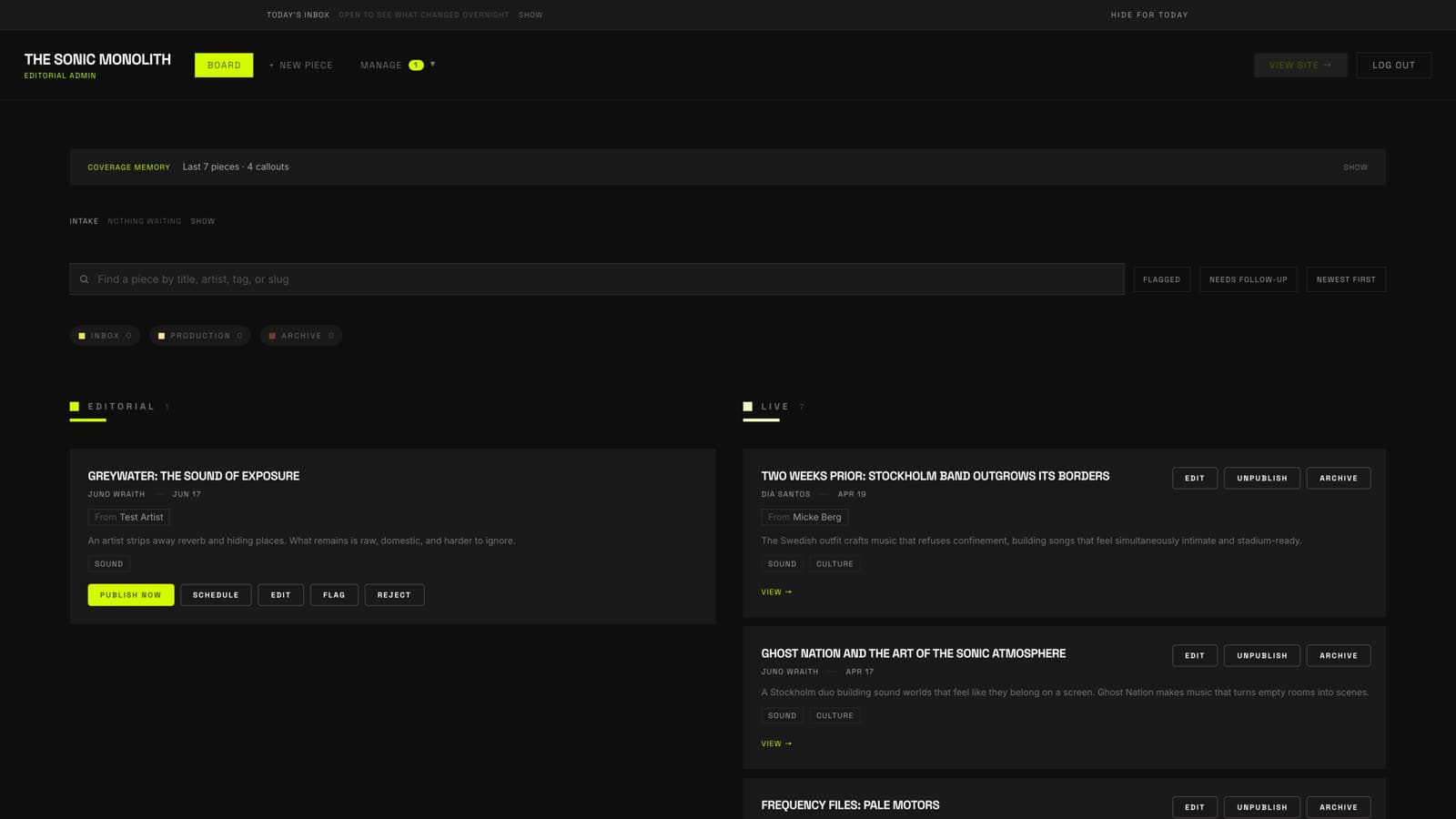
What happens after an artist interview
Artist answers
An invited artist answers a guided interview through a private link.
Draft
Their answers become an AI-assisted draft in the review queue.
My review
I read the piece and decide whether it's ready, needs changes, or shouldn't run.
Publish or schedule
If I approve it, I publish it or schedule it for later.
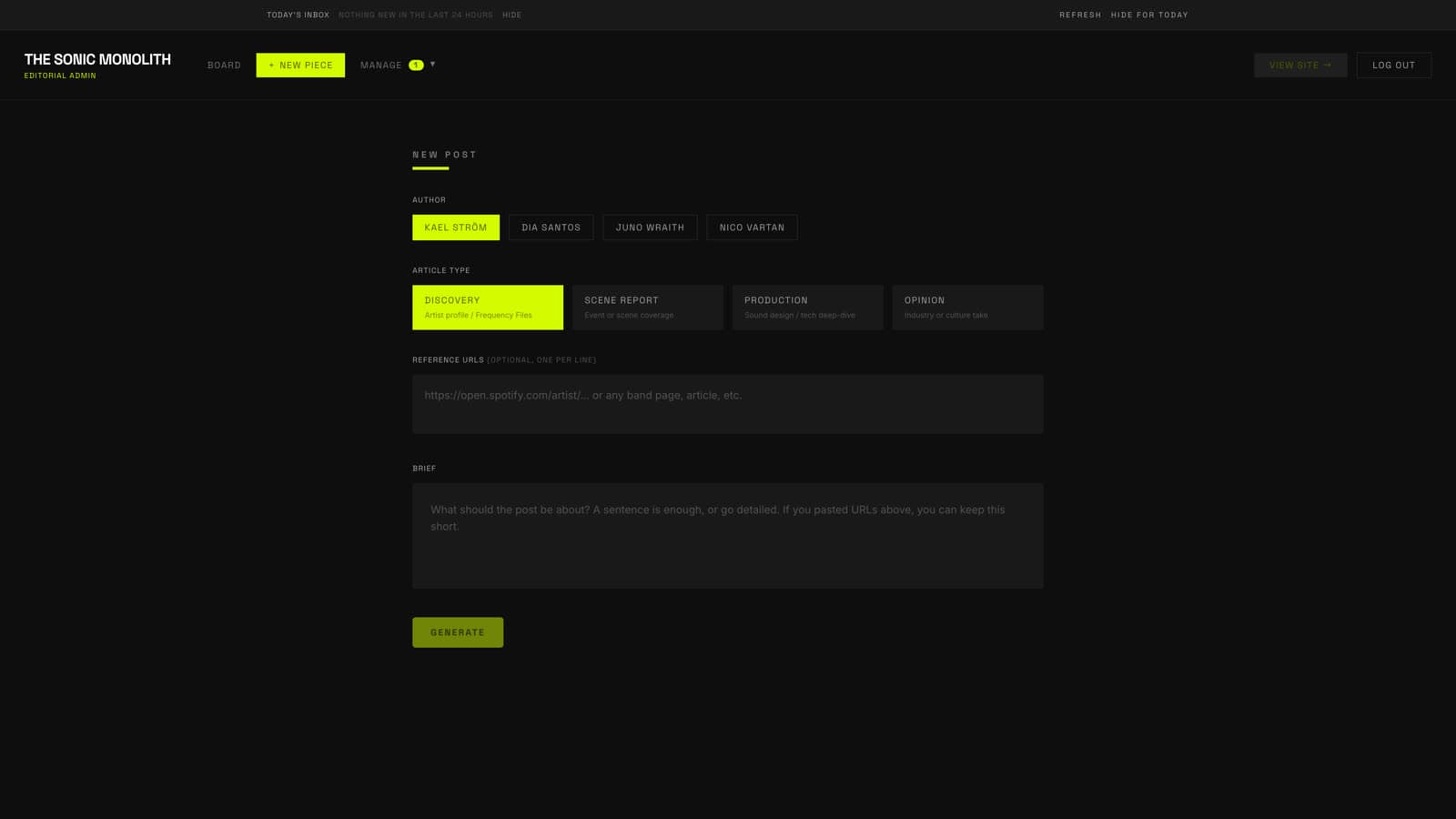
Writing the brief
I can also start a piece from the compose view, with an author voice, an article type, reference links and a brief.
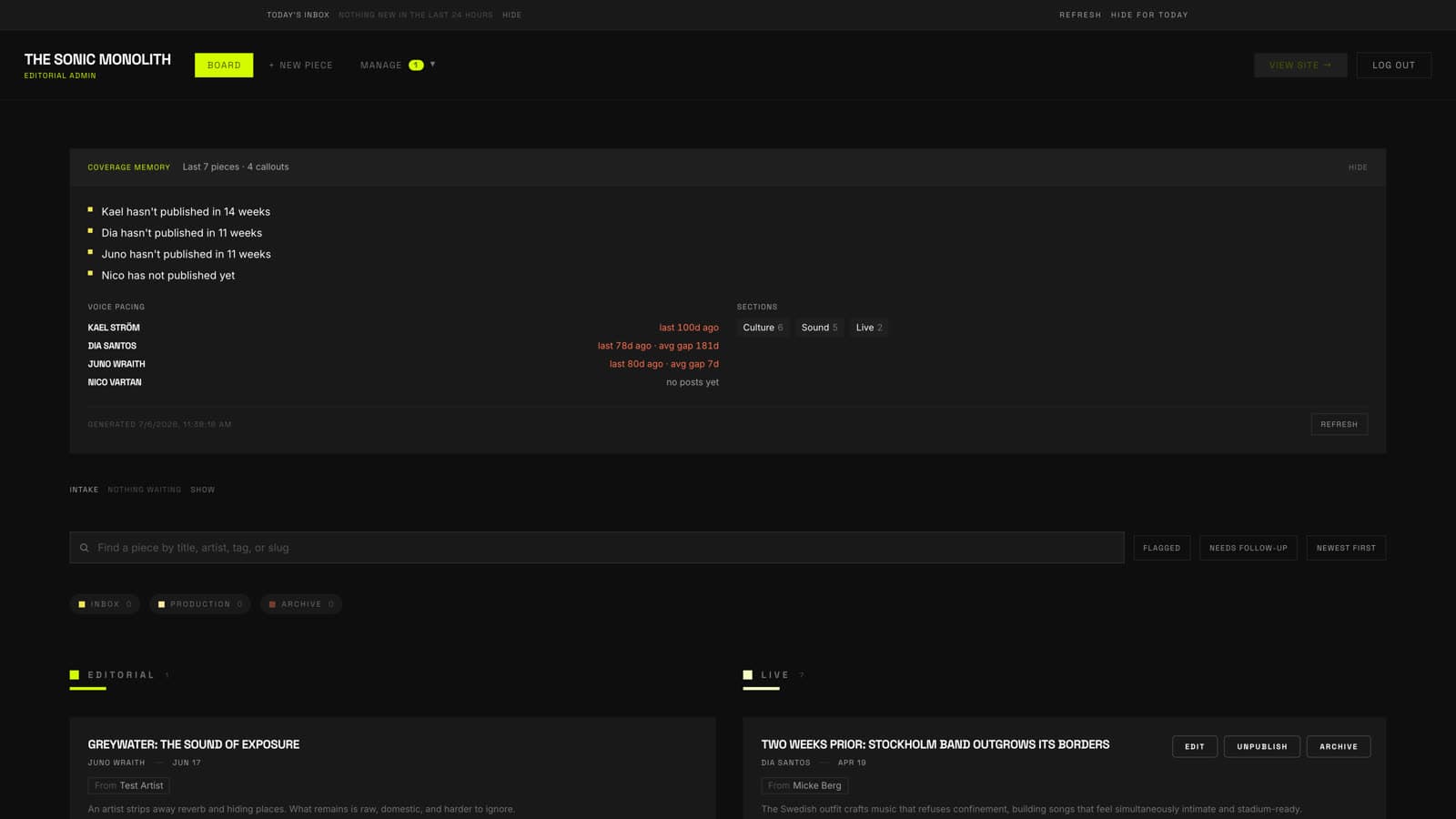
Keeping track of coverage
The coverage panel shows which voices have gone quiet and where the section gaps are. It helps me decide what to commission next.
The catalog is still small. Reading and editing each piece puts a limit on how often I can publish. That's the tradeoff.
I built it for the music, and to learn what it takes to run these workflows inside a real publication.
The site design
Heavy type, hard edges and acid yellow. The magazine has permanent artist pages and sections for sound, culture and live music.
The yellow flip
Hover over a headline and the whole thing flips to acid yellow, even when it fills the screen. It snaps. That's the brutalist point.
The reading experience
Articles open on a duotone photo with a huge headline. A yellow progress bar and a sticky table of contents follow along as you read.
Built with
Next.jsTypeScriptTailwind CSSNotionSupabaseClaude APIResendVercel
I use Claude's API for drafting from artist interviews and editorial briefs. The surrounding code supplies the context and checks the structure of what comes back before it can be used as a draft.